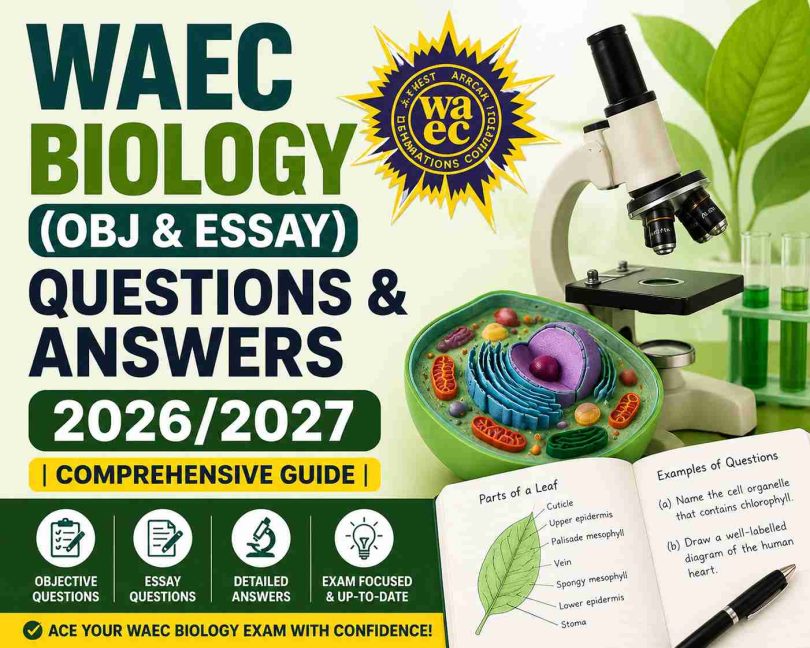

WAEC Biology (Obj & Essay) Questions and Answers: Are you preparing for WAEC and looking for Biology past questions for 2025? If you’ve been asking questions like “Where can I get WAEC Biology past questions?”, “What topics should I focus on?”, or “How are the questions structured?”, then this guide is for you. West African Examinations Council Biology is one of the core science subjects that requires understanding of living organisms, processes, and systems. Practicing past questions will help you understand the exam pattern and improve your chances of success.
In this article, you will see sample WAEC Biology past questions for 2025, including both objective and theory sections.
About WAEC Biology
WAEC Biology focuses on:
- Cell structure and organization
- Nutrition and digestion
- Respiration and excretion
- Reproduction and genetics
- Ecology and environment
The exam is divided into Objective (OBJ), Theory, and Practical/Alternative to Practical sections.
Also Read: WAEC Biology Practical Questions 2026: A Comprehensive Guide for Students
WAEC Biology (Obj & Essay) Questions and Answers 2026/2027
WAEC Biology Objective Questions (40 Questions)
Choose the correct answer from options A–D.
- The basic unit of life is
A. Tissue
B. Organ
C. Cell
D. System
Answer: C - Which organelle controls cell activities?
A. Mitochondria
B. Nucleus
C. Ribosome
D. Vacuole
Answer: B - Photosynthesis occurs in the
A. Nucleus
B. Chloroplast
C. Cytoplasm
D. Mitochondria
Answer: B - Which of the following is a producer?
A. Goat
B. Lion
C. Grass
D. Human
Answer: C - The process by which plants lose water is
A. Respiration
B. Transpiration
C. Digestion
D. Excretion
Answer: B - Which of the following is a mammal?
A. Lizard
B. Bird
C. Fish
D. Goat
Answer: D - The green pigment in plants is
A. Chlorophyll
B. Hemoglobin
C. Melanin
D. Cytoplasm
Answer: A - Which of the following is a mode of reproduction?
A. Digestion
B. Respiration
C. Fertilization
D. Circulation
Answer: C - The organ for breathing in fish is
A. Lungs
B. Gills
C. Skin
D. Nose
Answer: B - Which of the following is a carbohydrate?
A. Protein
B. Fat
C. Starch
D. Vitamin
Answer: C - Which part of the plant conducts water?
A. Phloem
B. Xylem
C. Root hair
D. Leaf
Answer: B - The function of red blood cells is to
A. Fight infection
B. Carry oxygen
C. Clot blood
D. Digest food
Answer: B - Which of the following is an excretory organ?
A. Heart
B. Kidney
C. Brain
D. Lung
Answer: B - The breaking down of food is called
A. Respiration
B. Digestion
C. Excretion
D. Assimilation
Answer: B - Which of the following is a herbivore?
A. Lion
B. Goat
C. Tiger
D. Snake
Answer: B - The smallest blood vessel is
A. Artery
B. Vein
C. Capillary
D. Aorta
Answer: C - Which of the following is a disease?
A. Growth
B. Malaria
C. Movement
D. Respiration
Answer: B - The process of breathing is called
A. Digestion
B. Respiration
C. Circulation
D. Excretion
Answer: B - Which of the following is a carnivore?
A. Goat
B. Cow
C. Lion
D. Sheep
Answer: C - Which organ pumps blood?
A. Liver
B. Heart
C. Kidney
D. Lung
Answer: B - Which of the following is a plant cell feature?
A. Cell wall
B. Ribosome
C. Nucleus
D. Cytoplasm
Answer: A - Which process releases energy in cells?
A. Photosynthesis
B. Respiration
C. Transpiration
D. Excretion
Answer: B - Which of the following is a vector?
A. Housefly
B. Mosquito
C. Dog
D. Goat
Answer: B - Which nutrient is needed for growth?
A. Protein
B. Fat
C. Vitamin
D. Water
Answer: A - Which of the following is a decomposer?
A. Plant
B. Animal
C. Fungi
D. Fish
Answer: C - Which part of the eye controls light entry?
A. Retina
B. Iris
C. Lens
D. Cornea
Answer: B - Which organ is responsible for hearing?
A. Eye
B. Ear
C. Nose
D. Skin
Answer: B - Which of the following is a renewable resource?
A. Coal
B. Oil
C. Sunlight
D. Gas
Answer: C - Which system transports nutrients?
A. Digestive
B. Circulatory
C. Respiratory
D. Excretory
Answer: B - Which of the following is a tissue?
A. Heart
B. Blood
C. Cell
D. Organ
Answer: B - Which of the following is a genetic unit?
A. Gene
B. Tissue
C. Organ
D. Cell
Answer: A - Which process forms gametes?
A. Mitosis
B. Meiosis
C. Fertilization
D. Growth
Answer: B - Which of the following is an amphibian?
A. Frog
B. Snake
C. Bird
D. Fish
Answer: A - Which part of the plant makes food?
A. Root
B. Stem
C. Leaf
D. Flower
Answer: C - Which of the following is a parasite?
A. Tapeworm
B. Fish
C. Goat
D. Plant
Answer: A - Which organ stores urine?
A. Kidney
B. Bladder
C. Liver
D. Lung
Answer: B - Which gas is released during respiration?
A. Oxygen
B. Carbon dioxide
C. Nitrogen
D. Hydrogen
Answer: B - Which of the following is a habitat?
A. Food
B. Shelter
C. Environment
D. Organism
Answer: C - Which organ digests food in humans?
A. Heart
B. Stomach
C. Lung
D. Kidney
Answer: B - Which of the following is an ecosystem?
A. Tree
B. Animal
C. Forest
D. Leaf
Answer: C
WAEC Biology Essay Questions 2026
Answer the following questions:
- Define a cell and state its functions.
- Explain the process of photosynthesis.
- Describe the human digestive system.
- State three differences between plant and animal cells.
- Explain the concept of ecology
Conclusion
In conclusion, preparing for WAEC Biology requires consistent effort, focused study, and a solid understanding of both theoretical concepts and practical skills. By utilizing past questions, practicing diagrams, and staying committed to your study routine, you can boost your chances of success in the exam. Remember, the key to passing WAEC Biology lies in mastering the core topics, familiarizing yourself with the exam format, and being well-prepared for all three papers. Good luck with your studies, and stay focused success in WAEC Biology is within your reach!
Frequently Asked Questions (FAQs) about WAEC Biology
Are WAEC Biology questions repeated?
Yes, WAEC often repeats questions, but they may be rephrased or slightly modified. Practicing past questions will help you recognize recurring themes and improve your chances.
Is Biology practical compulsory?
Yes, the practical or alternative to practical is an essential part of the exam. It’s important to be prepared for both the theoretical and practical aspects of Biology.
How can I pass WAEC Biology?
Consistent study, understanding key biological processes, and practicing diagrams are key to passing WAEC Biology. Make sure to also solve past questions to familiarize yourself with the exam format.
How many papers are in WAEC Biology?
WAEC Biology consists of three papers: Objective, Theory, and Practical. All three are important and contribute to your overall grade.
Where can I get more past questions?
You can find past questions in textbooks, from teachers, at tutorial centers, and on trusted educational websites.